About
Amy Walker
Neurodivergent Changemaker
I'm an autistic DEI consultant, neurodiversity coach, speaker and researcher. My work centres on making employment and everyday life more accessible for neurodivergent and disabled people — through coaching, consulting, research and advocacy.
Background
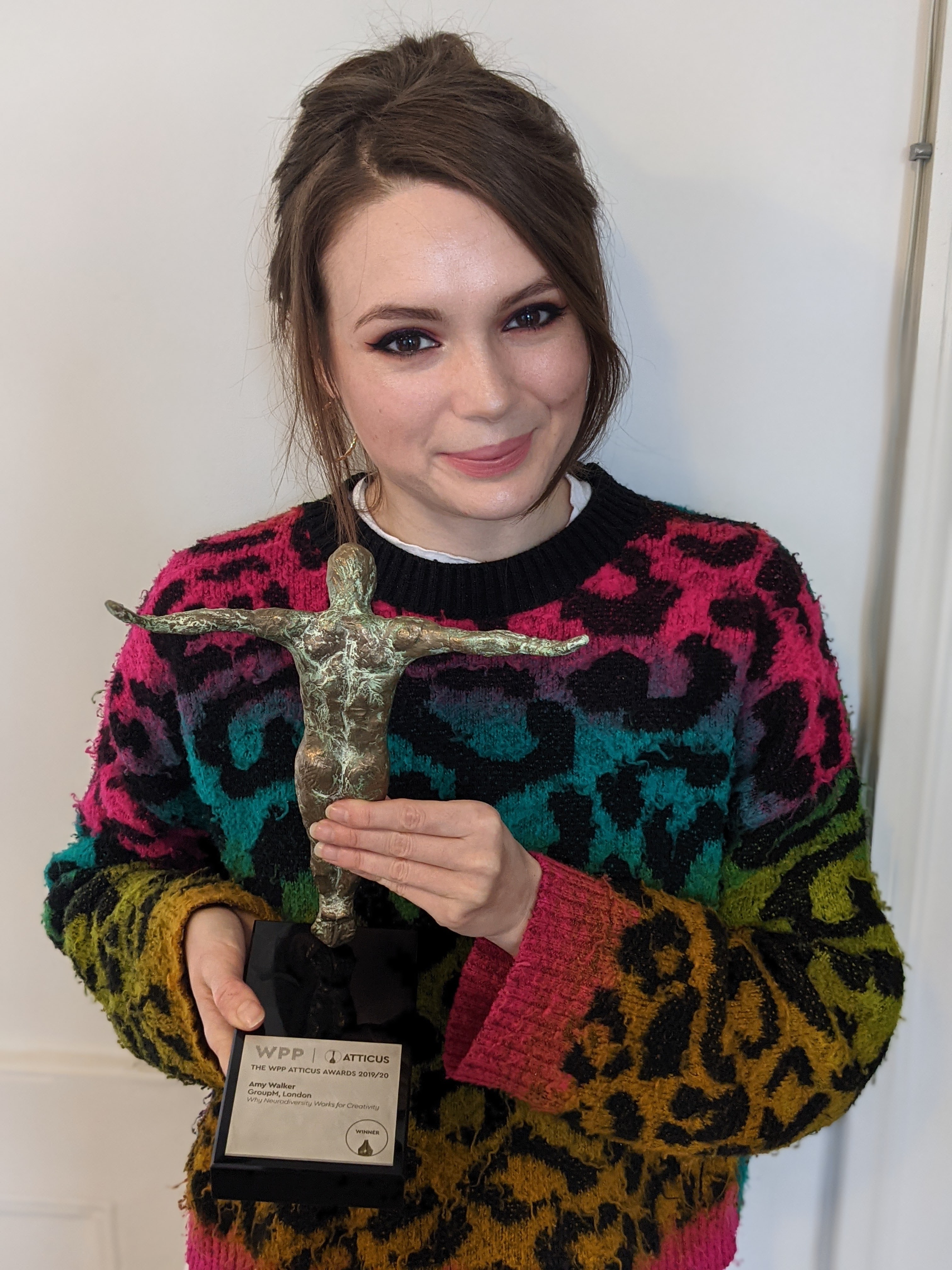
I dropped out of school at twelve after a difficult experience in mainstream education, in systems not designed for people like me. Whilst I was diagnosed with ADHD, Dyslexia and Dyspraxia as a child, I only got my Autism diagnosis after dropping out. I went on to study art, design and photography: my practice was grounded in social documentary, particularly people, culture, identity and representation.
I struggled to find accessible full-time work that would use my abilities but be flexible to my needs. I completed two internship programmes through Ambitious about Autism, first in the Civil Service, then at a large advertising holding company. I was fortunate to find myself in an environment that valued difference, and was interested in the perspectives of neurodivergent people. Through my advocacy work during my internship, I gained my first Diversity, Equity and Inclusion role. This gave me the opportunity to work on the very things I'd struggled with — and to try to make the path a little easier for others.
At GroupM / WPP, I spent five years running DEI programmes across a large media network, including talent initiatives for underrepresented groups, inclusive hiring, disability inclusion, mental health allyship, policy development and organisational measurement. That included making GroupM the first advertising agency to achieve Disability Confident Employer status, and building VisibleStart, a returners programme that employed 27 women over 45 and trained more than 600 people. I worked directly with C-Suite, Senior Leaders, People teams, employee networks and external partners — moving inclusion from aspiration into practice.
More recently, my work expanded into global accessibility and engagement in a contracted role at Meta, bringing together programme management, lived experience, research, policy and organisational strategy. Throughout my career, my focus has remained the same: making work more accessible, humane and sustainable for underrepresented people.
Inspired by the experience I had on the internship programme but aware of the lack of access for most neurodivergent people, I founded Neurodiversity Works, a campaign focused on improving access to meaningful, sustainable employment for neurodivergent people. Through this work, I have spoken at the House of Lords, met with government ministers, contributed to national and international publications, and advised on inclusive recruitment, workplace adjustments, accessibility, culture change and programme design — connecting charities, employers and neurodivergent job seekers around shared goals.
I have also worked as an autism research consultant, supporting co-design and participatory research projects so that autistic perspectives are built into research, services and decision-making from the start. This includes advising on whether research and services are autism-appropriate, accessible and genuinely useful to the people they are meant to support.
Amy Advocates brings these threads together: lived experience, research, employment, mental health, accessibility and systems change. My work is grounded in the belief that inclusion is not about helping people fit into broken structures. It is about changing the structures so that more people can participate and live well, without being forced to mask or push themselves past their limits.
What drives the work
My ethos is that neurodivergent people should not have to become less themselves in order to succeed, belong or be taken seriously.
Too often, neurodivergent people are expected to mask, over-adapt, explain themselves repeatedly, or carry the emotional labour of making inaccessible environments work. That can happen in workplaces, but it can also happen in families, friendships, relationships, education, healthcare and everyday life.
This is rarely just an individual problem. It often emerges from the mismatch between a person's nervous system, communication style, environment, relationships, expectations and wider culture. When we understand that, we can stop asking "what is wrong with me?" and start asking "what would make life accessible?"
Neuroinclusive support means taking people seriously as whole human beings and recognising both strengths and struggles. A big part of this work is learning to accept our differences, after years of being told to change or hide them. I support people to understand their needs, set boundaries, communicate more clearly, protect their energy and build systems that work with them rather than against them.
For some people, that might mean navigating work, burnout, adjustments or career change. For others, it can mean learning how to say no, recovering from years of over-giving, making sense of relationship patterns, or finding ways to live with less shame and more self-trust.
I bring together lived experience, coaching, research, organisational practice and a deep interest in how people make sense of themselves. I am driven to help people identify what isn't working, advocate for themselves, and build a life that is more sustainable.
For me, this work is about justice. Neurodivergent people deserve more than survival, or being treated as an afterthought, or only being valued when they are useful. They deserve work, relationships and lives that work for them.
Career highlights
- 2026 Founded Amy Advocates — independent coaching, consulting and speaking practice
- 2024–2025 Global Programme Manager, Meta
- 2023–present Honorary Research Associate, University of Bristol
- 2022–2024 Named author on four peer-reviewed studies into neurodivergent employment (Autistica DARE initiative) — published in Autism, Autism in Adulthood and PLOS ONE
- 2018–2024 Diversity and Inclusion Manager, GroupM / WPP
- 2018 Founded the Neurodiversity Works campaign
- 2017 Autism Exchange Internship — Department for Business, Energy and Industrial Strategy, New Nuclear Team
Qualifications & credentials
- Qualified Neurodiversity Coach — Attuned Neurodiversity Coaching
- Accredited member, Association for Coaches
- Honorary Research Associate, University of Bristol
- Certificate in Psychodynamic Counselling, Enfield Counselling
Want to work together?
Whether you're an individual looking for coaching or an organisation working on inclusion, I'd love to hear from you.